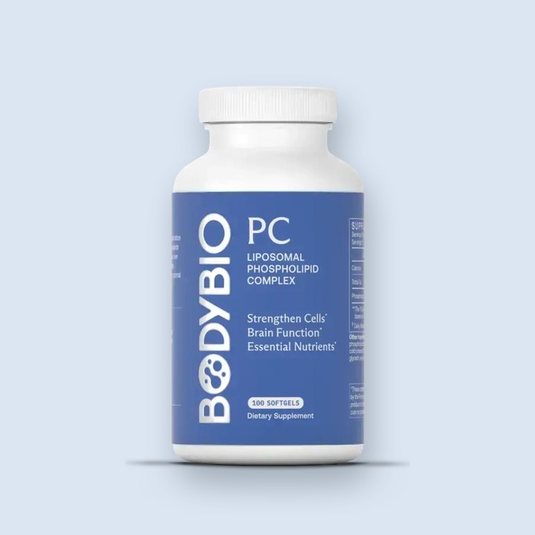
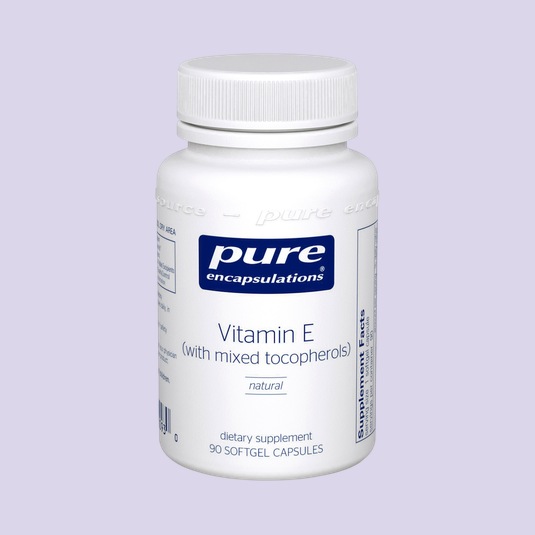
Omega-3 EPA/DHA
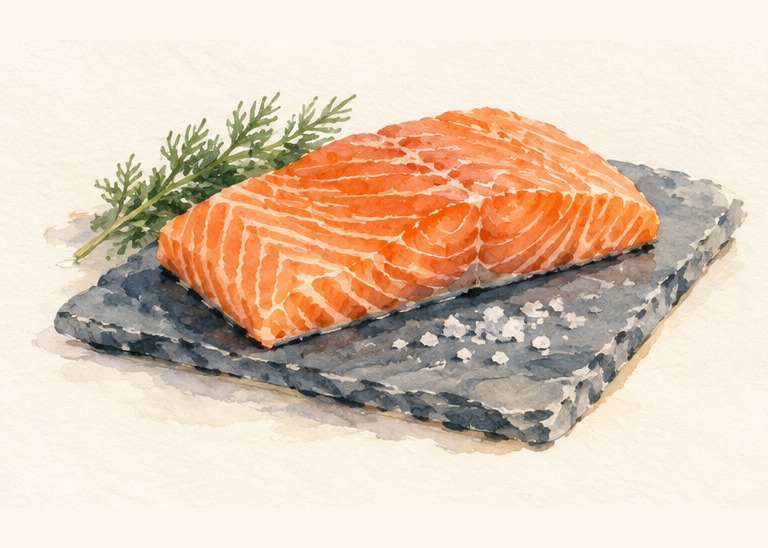 Salmon, sardines, mackerel
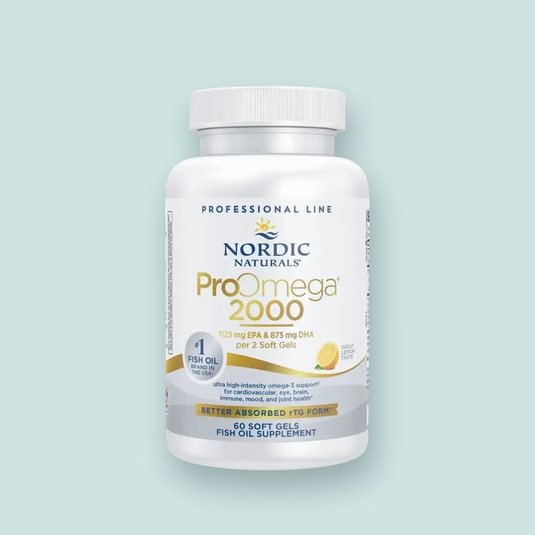
ProOmega 2000, Lemon
- Form
- Concentrated re-esterified triglyceride fish oil; 2,000 mg EPA + DHA per two-softgel serving
- Additives
- Clean, no flow agents or additives on this guide's avoid list
- Why this one
- Triglyceride form, high concentration so trial-range intakes take fewer softgels, third-party tested for oxidation and metals.
- SKU
- NORD-12138
What it is
The two long-chain omega-3 fatty acids from cold-water fish are the most-consumed anti-inflammatory supplement in the world and one of the most-trialed in IBD, and the trial record is honestly mixed. The biology is not in doubt. The clinical question has always been dose, form, and which disease. The largest trials ever run, in Crohn's maintenance, were negative. Smaller trials in Crohn's and a recent well-designed trial in ulcerative colitis were positive. This entry tries to hold both facts at once.
How it works
EPA and DHA are incorporated into cell membranes, where they displace the omega-6 fatty acid arachidonic acid. Arachidonic acid is the raw material for the most inflammatory prostaglandins and leukotrienes (PGE2, LTB4); EPA competes for the same enzymes and yields far less inflammatory products. More importantly, EPA and DHA are the precursors of the specialized pro-resolving mediators (resolvins, protectins, maresins) the molecules that actively switch inflammation off rather than merely failing to switch it on. They also signal through the GPR120 receptor on immune cells, lower TNF-α and IL-1β production, and in the UC trial below, brought down fecal calprotectin, the stool marker of neutrophils in the gut wall.
Membrane composition changes slowly, over weeks, which is why short trials and low doses tend to fail.
- Category
- Lipid (polyunsaturated fatty acid)
- Phenotype
- UC (recent positive RCT); Crohn's maintenance (large trials negative, one small trial positive)
- Other IBD
- Indeterminate colitis: read both. Microscopic colitis: no trials.
- Whole-food source
- Salmon, sardines, mackerel, anchovies, herring; salmon roe. Plant ALA (flax, chia) converts poorly to EPA/DHA
- Cross-references
- F-08 phosphatidylcholine (membrane lipids) · J-13 vitamin E (protects oils from oxidation)
The evidence
An enteric-coated fish-oil preparation delivering 2.7 g/day of omega-3 free fatty acids, versus placebo, for one year. A 33-percentage-point absolute reduction in the one-year relapse rate, the landmark positive trial, and the one every later trial tried to replicate.
Two large randomized, double-blind trials of 4 g/day omega-3 free fatty acids for up to 58 weeks. In EPIC-1, one-year relapse was 31.6% on omega-3 vs 35.7% on placebo, not significant; EPIC-2 was also negative. The authors' conclusion is unambiguous: omega-3 free fatty acids did not prevent relapse of Crohn's disease. This is the reason the evidence bar is not a 5.
Patients in clinical remission but with fecal calprotectin ≥150 μg/g (a marker of ongoing mucosal inflammation and a predictor of relapse). Highly purified EPA as free fatty acid, 2 g/day, or placebo for 6 months. Calprotectin fell significantly in the EPA group (p = 0.004); 6-month relapse-free survival was 76.7% vs 50%. A companion study showed EPA was incorporated into red-cell membranes and shifted colonic differentiation markers and microbiota.
Across the IBD trials, formulation varied, enteric-coated free fatty acids in most positive studies, non-coated ethyl esters in others, and trials that enrolled patients immediately after drug-induced remission tended to fail. A useful map of why the literature disagrees with itself.
Dose as studied
Scroll sideways to see every column →
| Study | Form | Dose (EPA + DHA) | Duration |
|---|---|---|---|
| Belluzzi 1996 | Enteric-coated free fatty acids | 2.7 g/day | 12 months |
| Feagan 2008 (EPIC) | Free fatty acids | 4 g/day (negative) | up to 58 weeks |
| Scaioli 2018 | EPA free fatty acid, sustained release | 2 g/day EPA* | 6 months |
*The trial registry and conference abstract report 2 g/day (two 500 mg capsules twice daily); the journal abstract lists "500 mg twice daily." Reported as used in the trials named. Not a recommendation.
What to expect
Slow. Membrane omega-3 content takes roughly 8–12 weeks to plateau, and the positive trials ran 6–12 months. The most useful marker to follow, if your team is willing, is fecal calprotectin, which is what the UC trial moved. Fishy aftertaste or "fish burps" usually mean an oxidized or low-quality oil, not a normal side effect of a fresh one. Loose stool at higher intakes.
Form, timing and bioavailability
Most fish oil on the shelf is in the ethyl ester form, which is cheap to concentrate and is not how omega-3s occur in nature. The re-esterified triglyceride (rTG) form is absorbed considerably better, the gap is largest when taken without a fat-containing meal, and shrinks with one. Take fish oil with your largest meal regardless. The trials used pharmaceutical free-fatty-acid and enteric-coated preparations that are not sold as supplements; a concentrated rTG oil is the closest consumer equivalent, and concentration matters because trial-range intakes (2–3 g/day of EPA + DHA) are impractical with dilute oils. Look for third-party testing for heavy metals and for oxidation (a published TOTOX value). Refrigerate after opening.
Who should be careful
Fish or shellfish allergy (most purified oils are tolerated, but ask); bleeding disorders; anyone with surgery scheduled should tell the surgical team. Large cardiology trials of high-dose omega-3 reported a small increase in atrial fibrillation, relevant if you have a heart-rhythm history.
Interactions with IBD medications
No known pharmacokinetic interactions with mesalamine, thiopurines, methotrexate, steroids, calcineurin inhibitors, JAK inhibitors or biologics. Additive effect with anticoagulants and antiplatelet drugs. May modestly lower blood pressure alongside antihypertensives.
Andrew's notes
Make sure it is the triglyceride form; the cheaper ethyl-ester concentrates are absorbed less well, especially without a fatty meal. Omega-3 matters most for people who do not eat much fish, and on the weeks I eat fish several times I take less of it. Its research background across cardiovascular and inflammatory conditions is enormous, while the IBD trials are more mixed, so I hold it as a foundation for the whole body rather than a lever I expect to feel from week to week.