Quercetin
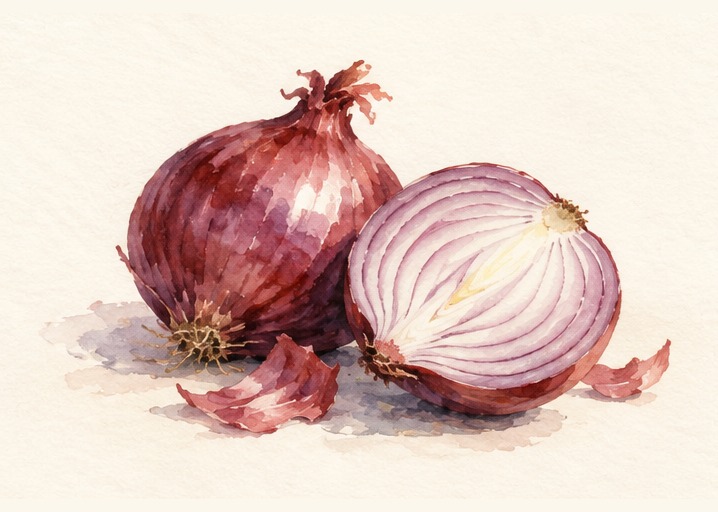 Red onion, capers, apples
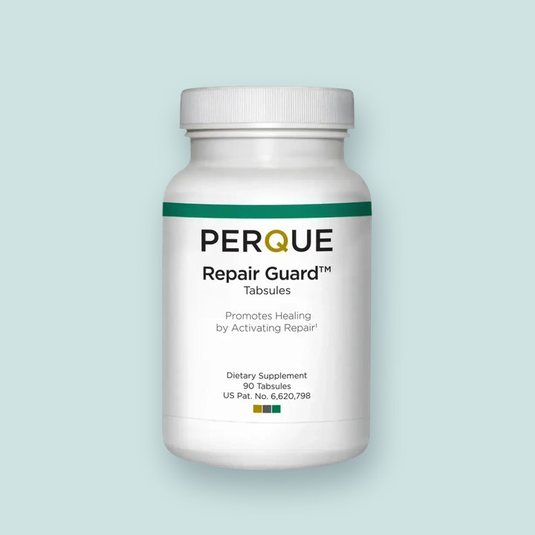
Repair Guard
- Form
- Quercetin dihydrate 1,000 mg + pomegranate 60 mg + OPC 10 mg + magnesium 35 mg per tabsule
- Additives
- None.
- Why this one
- A full gram of quercetin with no fillers, flow agents or binders, rare in this category.
- SKU
- PER-131
What it is
Quercetin is the workhorse flavonoid of the plant kingdom and one of the most-studied antioxidants in existence, in cells and in animals. In people with IBD, it has almost no direct trial evidence, and I want that stated in the first paragraph rather than the last. It is in the Five because of what I have seen in practice over a decade, and because the biology is unusually well matched to what goes wrong in this disease. The evidence bar below says 2. I have left it there.
How it works
Four properties matter. Quercetin is a mast-cell stabilizer: it reduces histamine release, which is why it is the flavonoid people reach for in allergy and mast-cell conditions, and why it is relevant to the histamine-type symptoms so common in IBD. It inhibits NF-κB signaling and lowers TNF-α and IL-6 in colitis models. It is an agonist at the aryl hydrocarbon receptor (AhR), the same receptor activated by the microbiome's tryptophan metabolites, which is how it connects to the amino acid and microbiome sections of this guide; in a 2021 mouse study, quercetin's benefit in chronic colitis was AhR-dependent. And in models it raises tight-junction protein expression and increases colonic microbial diversity.
Like curcumin, it is poorly absorbed as the free aglycone, and like curcumin, that shapes which product is worth buying.
- Category
- Flavonoid antioxidant
- Phenotype
- Both, on mechanism. Observationally, dietary intake tracks with lower UC risk but not Crohn's
- Other IBD
- Indeterminate colitis: read both. Microscopic colitis: no trials; the mast-cell mechanism is plausible, untested.
- Whole-food source
- Red onion, capers, apples (skin), berries, kale, buckwheat
- Cross-references
- C-14 rutin (quercetin's glycoside precursor) · I-01 tryptophan (AhR pathway) · H-07 DAO (histamine)
The evidence
Over 9.7 years, people in the highest quintile of dietary quercetin intake had 24% lower risk of developing IBD and 31% lower risk of ulcerative colitis (no association for Crohn's); parallel mouse experiments at physiological doses reproduced a protective effect. Observational: intake, not supplementation.
Among people with IBD, those in the highest quartile of dietary quercetin intake had less than half the risk of bowel resection surgery (hazard ratio 0.46) and roughly half the all-cause mortality (0.53) of the lowest quartile. Still observational, but it is the first human signal that quercetin tracks with hard outcomes in people who have the disease.
Summarizes the preclinical literature: barrier consolidation, increased colonic microbial diversity, restoration of local immune homeostasis, and reduced oxidative stress across DSS, TNBS and acetic-acid colitis models and in Citrobacter infection colitis.
Quercetin and indole-3-carbinol improved chronic colitis in normal mice; the benefit was lost in mice lacking the aryl hydrocarbon receptor, direct evidence for the AhR mechanism.
Randomized trials of oral quercetin exist in postmenopausal bone and inflammation (500 mg/day, 90 days), COPD (up to 2,000 mg/day, pilot), cardiac surgery inflammation, and other settings. They establish tolerability at these doses. None involved IBD.
Dose as studied
Scroll sideways to see every column →
| Setting | Form | Dose | Duration |
|---|---|---|---|
| IBD (human) | No interventional trials | ||
| Postmenopausal RCT | Quercetin | 500 mg/day | 90 days |
| COPD pilot | Quercetin | 2,000 mg/day | short-term |
Animal doses are not translatable to people and are deliberately omitted. Not a recommendation.
What to expect
Because there are no IBD trials, there is no trial-level expectation to give you. What people describe (and what I have observed) is a reduction in histamine-type symptoms: flushing, itch, reactivity to certain foods, and the bloating that goes with them. That is observation, and it is labeled as such.
Form, timing and bioavailability
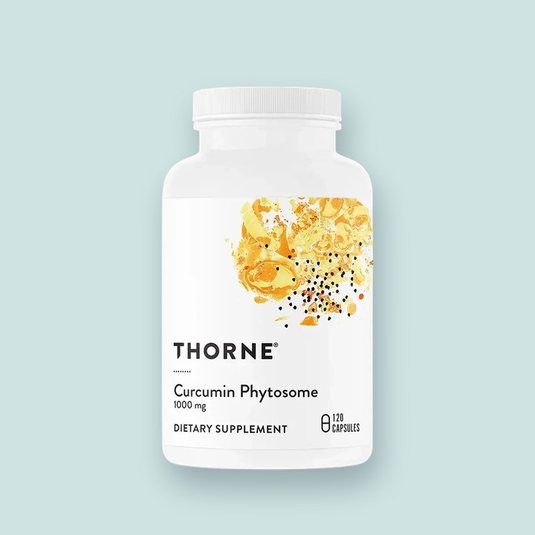
Free quercetin is absorbed poorly and variably (low single-digit percent in most studies). Absorption improves with food and fat. Phytosome preparations report substantially higher plasma levels than plain quercetin. Quercetin is very frequently co-formulated with bromelain (H-04) and vitamin C. The product above is a clean quercetin dihydrate at a full gram per tabsule, with no fillers at all, the reason it was chosen over the many quercetin products that carry three or four of the additives this guide warns against.
Who should be careful
Kidney disease (very high or intravenous quercetin has been associated with kidney injury historically); pregnancy and breastfeeding at supplemental doses; anyone with a history of hormone-sensitive conditions should discuss it, given quercetin's weak estrogenic activity in laboratory studies. Thyroid disease: in laboratory and rat studies quercetin reduced thyroid-cell growth, iodide uptake and thyroid function; there is no clinical trial of supplemental quercetin on the human thyroid, and one client of mine with a thyroid concern raised the question with me. That is one case and a laboratory signal, not a class-wide warning about polyphenols; if you have thyroid disease, put supplemental quercetin on the list you discuss with your team. (refs 201–203)
Interactions with IBD medications
Quercetin inhibits CYP3A4 and P-glycoprotein, which can raise blood levels of cyclosporine and tacrolimus; this is the interaction to take seriously. Additive antiplatelet effect with anticoagulants. May reduce absorption of some quinolone antibiotics. No known interactions with mesalamine, thiopurines, methotrexate, steroids or biologics.
Andrew's notes
This is, hands down, in my opinion, the most powerful supplement for most people with IBD. That is a strong claim, I know it is a strong claim, and I am open to being wrong about it; it is also the entry with the largest gap between the quality of the research and what I actually see. Repair Guard is the most powerful version I know, and it carries a few companion compounds. Among my clients, roughly 90% have a very positive reaction, 5% neutral, 5% negative. What I see: one to three tabsules a day as maintenance, three to five in a flare, six in a very serious flare. The bottle allows up to twelve; I think that is far too high and would not do it. This is what I observe with clients, not a dose for you; work it out with your team.